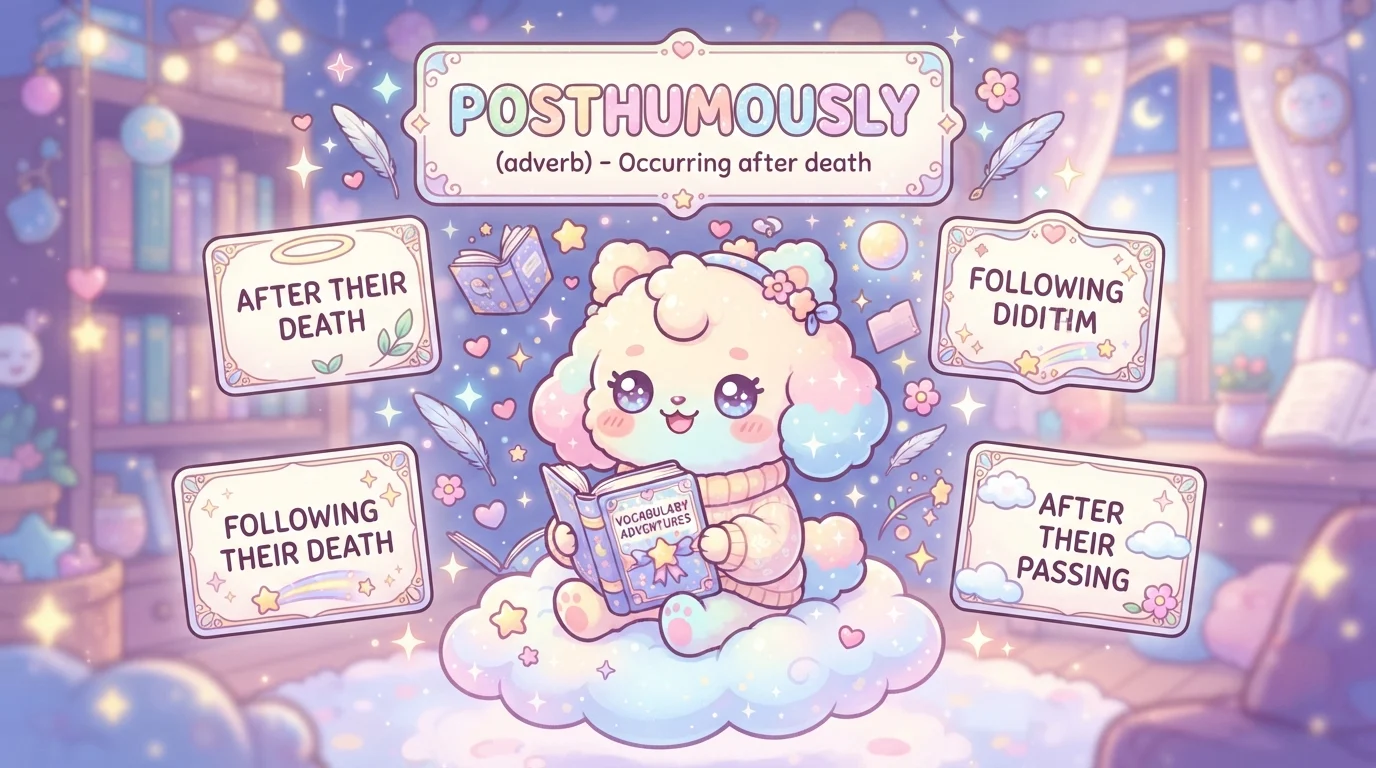
The word posthumously is used when something happens after a person’s death. It commonly appears in discussions about awards, publications, honors, discoveries, recognition, and works released after an individual’s death.
Finding the right synonym for posthumously can be tricky because there isn’t always a perfect one-word replacement. Expressions such as after death, after someone’s death, following their death, and after their passing can communicate a similar meaning, while words like postmortem may have a different or more specific meaning.
This guide explains the meaning of posthumously, its closest synonyms, appropriate alternatives, examples, common mistakes, and the differences between related expressions.
Quick Answer
The closest synonyms for posthumously are after death, after someone’s death, following their death, after their passing, and after they died. Posthumously is the most concise and formal choice, especially in biographies and formal writing.
What Does “Posthumously” Mean?
Posthumously is an adverb meaning after a person’s death.
It is commonly used when something happens or is recognized after someone has died.
Examples
- The author was honored posthumously.
- She received the award posthumously.
- His final book was published posthumously.
- The artist became famous posthumously.
- The discovery was credited to him posthumously.
Why People Look for Synonyms of Posthumously
You might want an alternative to posthumously when:
- You want simpler English.
- You’re writing for a general audience.
- You want to avoid repetition.
- You’re explaining the word to English learners.
- You need a more conversational expression.
- You want to vary your writing style.
Best Synonyms of Posthumously
After Death
After death is one of the simplest alternatives.
- The award was given after his death.
- Her book was published after her death.
After Someone’s Death
This phrase clearly identifies whose death you’re referring to.
- The painting became famous after the artist’s death.
- The documents were released after the president’s death.
Following Their Death
Following their death is formal and works well in professional or academic writing.
- The organization continued following his death.
- The research received attention following her death.
After They Died
This is a natural and conversational alternative.
- The novel was published after he died.
- She received recognition after she died.
After Their Passing
After their passing is a softer, more respectful expression.
- The musician received the honor after his passing.
- The family published her memoir after her passing.
After the Person’s Death
This expression is clear and neutral.
- The collection was released after the person’s death.
- The award was announced after the recipient’s death.
Afterward, Following Their Death
This can be useful when the context already makes the person’s death clear.
- The work was completed during his lifetime and published following his death.
Posthumously Synonyms Comparison
| Alternative | Meaning | Style |
|---|---|---|
| Posthumously | After a person’s death | Formal |
| After death | After someone dies | Simple |
| After their death | Following someone’s death | Neutral |
| Following their death | After someone dies | Formal |
| After they died | After someone died | Conversational |
| After their passing | After someone’s death | Respectful |
| Following their passing | After someone’s death | Formal/respectful |
When to Use Each
Use posthumously when:
- Writing formally.
- Writing biographies.
- Discussing awards or honors.
- Discussing books or artwork published after an author’s death.
- Writing academic or historical material.
Use after their death when:
- You want simple, direct English.
- Your readers may not know the word posthumously.
Use after they died when:
- Writing conversationally.
- Speaking informally.
- Explaining something in simple language.
Use after their passing when:
- You want a respectful or gentle tone.
Use following their death when:
- Writing formally or professionally.
- You want to avoid repeating posthumously.
Examples of Posthumously and Its Synonyms
- He received the award posthumously.
- He received the award after his death.
- She became famous posthumously.
- She became famous after she died.
- His novel was published posthumously.
- His novel was published following his death.
- The artist received recognition posthumously.
- The artist received recognition after his passing.
- The discovery was credited to her posthumously.
- The discovery was credited to her after her death.
- His work gained popularity following his death.
- The biography was released after he died.
Common Mistakes
Using “posthumously” when the person is alive
❌ She received the award posthumously while accepting it herself.
✅ She received the award during her lifetime.
Posthumously specifically relates to something occurring after death.
Confusing “posthumously” with “posthumous”
- Posthumously = adverb
- Posthumous = adjective
Examples:
- He was honored posthumously.
- He received a posthumous award.
Confusing “posthumously” with “postmortem”
These words are related to death but aren’t interchangeable.
Posthumously means after a person’s death.
Postmortem commonly refers to an examination after death or, figuratively, an analysis conducted after an event.
Memory Trick
Remember:
Post = After
Humous = Related to a person
So:
Posthumously = After a person’s death
A simple phrase to remember is:
Posthumously = After they died
American vs. British English
There is no significant difference between American and British English regarding posthumously.
Both varieties commonly use:
- Posthumously
- After his/her death
- Following their death
- After their passing
The choice mainly depends on formality and context rather than regional English.
Similar Words
Other words and expressions related to death and timing include:
- Posthumous
- Postmortem
- Deceased
- Late
- After death
- Following someone’s death
- After their passing
- Memorial
- In memoriam
- Retrospectively
These words aren’t exact synonyms in every situation, so choose them according to the intended meaning.
Final Verdict
The best synonym for posthumously depends on your writing style. After their death is the clearest everyday alternative, while following their death works well in formal writing. After they died sounds natural and conversational, while after their passing provides a more respectful tone.
However, if you need a concise, precise, and formal word meaning after a person’s death, posthumously remains the best choice.
Remember This
Posthumously = After a person’s death
Useful alternatives:
- After their death = simple and clear
- Following their death = formal
- After they died = conversational
- After their passing = respectful
- Posthumously = concise and formal
Frequently Asked Questions
What is the closest synonym for posthumously?
The closest simple synonym is after their death or following their death.
What does posthumously mean?
Posthumously means something happened or was done after a person’s death.
Is “after death” the same as “posthumously”?
They can have the same basic meaning, but posthumously specifically describes something happening after a particular person’s death.
What is the difference between posthumous and posthumously?
Posthumous is an adjective, while posthumously is an adverb.
- Posthumous award
- Awarded posthumously
Is “after their passing” a synonym for posthumously?
Yes, in many contexts. After their passing is a softer and more respectful way to refer to something happening after someone’s death.
Is posthumously formal?
Yes. Posthumously is relatively formal and is common in biographies, journalism, historical writing, and discussions of awards or publications.
Can I use “after they died” instead?
Yes. After they died is a natural and simpler alternative, especially in conversational English.
Conclusion
Posthumously is a precise word meaning after a person’s death. It is especially useful when discussing awards, honors, publications, discoveries, artwork, or recognition that occurs after someone has died. Although there are several alternatives, each creates a slightly different tone.
For simple writing, choose after their death. For formal writing, following their death works well. For conversational English, after they died sounds natural. If you want a respectful expression, after their passing is a good choice.

I’m Joseph Davis, a language enthusiast passionate about synonyms and clear communication. I enjoy simplifying vocabulary, exploring word meanings, and creating helpful content that makes writing more engaging, accurate, and confident.