The phrase “love you” is one of the most meaningful ways to express affection, care, appreciation, or emotional closeness. However, English offers many other ways to communicate a similar feeling without repeating the same phrase.
Learning “love you” synonyms and alternatives can help you express yourself more naturally in messages, cards, poems, conversations, friendship, family relationships, and creative writing. The best expression depends on the kind of affection you want to communicate.
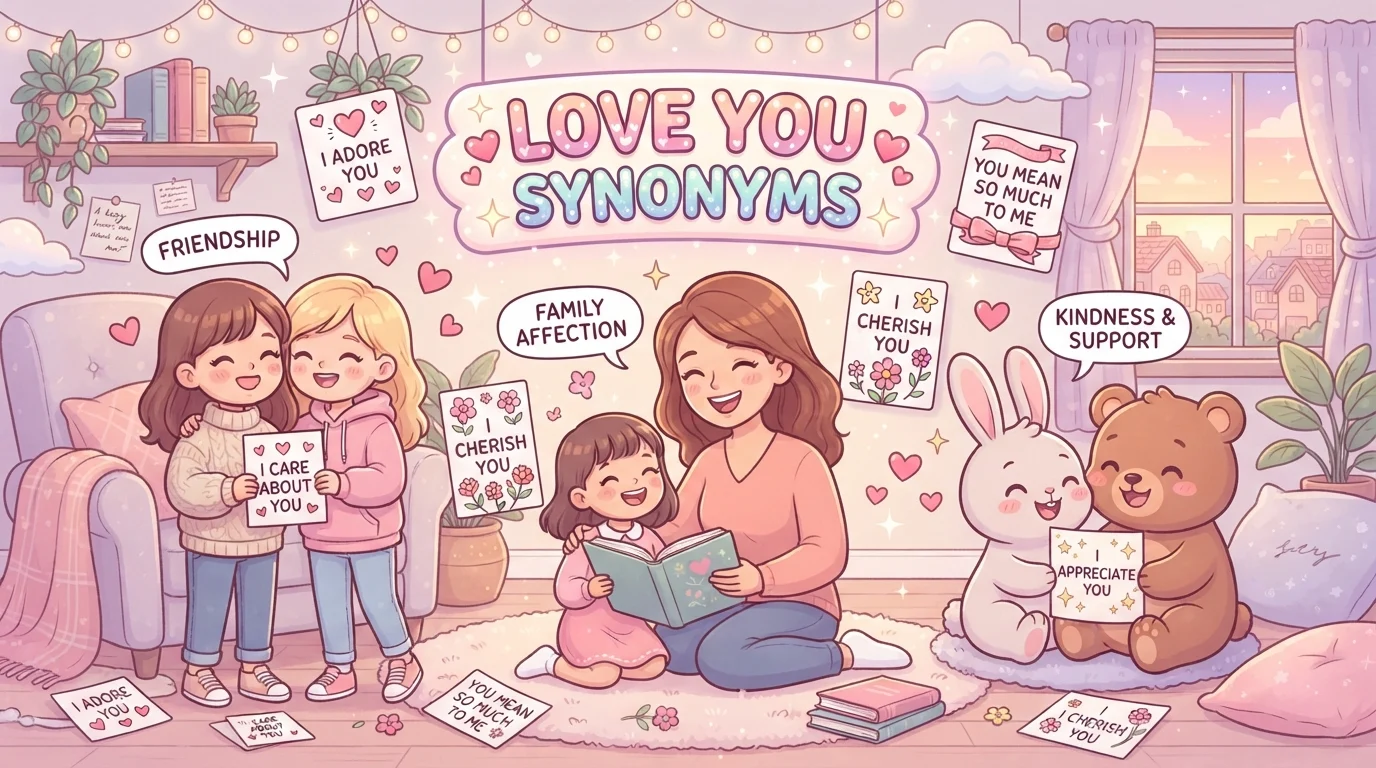
Some alternatives are romantic, while others are warm and suitable for friends or family. Expressions such as “I adore you” sound affectionate, while “I care about you deeply” emphasizes emotional concern. “You mean so much to me” expresses importance without directly saying “I love you.”
What Does “Love You” Mean?
“Love you” is an informal expression used to communicate strong affection, care, or emotional attachment toward someone.
Simple Definition
Love you = I have deep affection and care for you.
The exact meaning depends on the relationship and context.
For example:
I love you, Mom.
This expresses family affection.
You mean so much to me.
This communicates deep emotional importance without directly using the word love.
I adore you.
This expresses strong affection and admiration.
30 Synonyms and Alternatives for “Love You”
Some expressions below are direct alternatives, while others communicate related feelings of affection, appreciation, closeness, or care. They are not all interchangeable in every situation.
I Adore You
Meaning: I like and admire you very strongly.
Example:
I adore you and everything you bring into my life.
Best usage: Warm, affectionate, and romantic contexts.
Tone: Very affectionate.
I Care About You
Meaning: You are important to me, and I genuinely care about your well-being.
Example:
I want you to know that I really care about you.
Best usage: Friends, family, and close relationships.
Tone: Warm and sincere.
You Mean So Much to Me
Meaning: You are extremely important to me.
Example:
You mean so much to me, and I appreciate having you in my life.
Best usage: Emotional messages and meaningful conversations.
Tone: Deep and heartfelt.
You Mean the World to Me
Meaning: You are incredibly important to me.
Example:
You mean the world to me, and I’m grateful for your kindness.
Best usage: Romantic, family, or very close relationships.
Tone: Deeply affectionate.
I Cherish You
Meaning: I value and care about you deeply.
Example:
I cherish the memories we’ve created together.
Best usage: Deep emotional relationships and heartfelt writing.
Tone: Tender and meaningful.
I Treasure You
Meaning: I consider you extremely valuable and important.
Example:
I treasure you and the friendship we share.
Best usage: Close relationships, friendship, and heartfelt messages.
Tone: Warm and sincere.
I Appreciate You
Meaning: I value you and recognize the good things you do.
Example:
I appreciate you more than you know.
Best usage: Friends, family, teachers, teammates, and other important people.
Tone: Warm and respectful.
You Are Special to Me
Meaning: You have an important place in my life.
Example:
I hope you know how special you are to me.
Best usage: Friends, family, and affectionate relationships.
Tone: Sweet and gentle.
You Have My Heart
Meaning: You have a deeply important place in my emotions.
Example:
No matter where life takes us, you have my heart.
Best usage: Romantic or poetic writing.
Tone: Romantic and expressive.
I’m Fond of You
Meaning: I have warm affection for you.
Example:
I’ve become very fond of you over the years.
Best usage: Gentle affection and less intense expressions.
Tone: Soft and understated.
I Adore Having You in My Life
Meaning: I greatly appreciate your presence in my life.
Example:
I adore having you in my life because you always brighten my day.
Best usage: Heartfelt messages.
Tone: Warm and affectionate.
You Matter to Me
Meaning: Your feelings, presence, and well-being are important to me.
Example:
Never forget that you matter to me.
Best usage: Friends, family, and supportive conversations.
Tone: Caring and sincere.
I’m Grateful for You
Meaning: I deeply appreciate having you in my life.
Example:
I’m grateful for you and all the kindness you’ve shown me.
Best usage: Gratitude and emotional appreciation.
Tone: Warm and sincere.
I Hold You Dear
Meaning: I care about you deeply and consider you precious.
Example:
I hold you dear and will always value our friendship.
Best usage: Literary, heartfelt, and sentimental writing.
Tone: Gentle and poetic.
You’re Precious to Me
Meaning: You are extremely valuable and important to me.
Example:
Your friendship is precious to me.
Best usage: Close relationships and emotional messages.
Tone: Tender.
I Feel Deeply Connected to You
Meaning: I feel a strong emotional bond with you.
Example:
I feel deeply connected to you because we understand each other.
Best usage: Meaningful conversations and close relationships.
Tone: Deep and sincere.
I Have So Much Affection for You
Meaning: I feel a great deal of warmth and fondness toward you.
Example:
I have so much affection for you and truly value our friendship.
Best usage: Formal, thoughtful, or reflective writing.
Tone: Warm.
You Bring Me Joy
Meaning: Your presence makes me feel happy.
Example:
Your kindness always brings me joy.
Best usage: Sweet messages and appreciative writing.
Tone: Positive and affectionate.
You Make My Life Better
Meaning: Having you in my life has a positive impact on me.
Example:
You make my life better simply by being yourself.
Best usage: Heartfelt messages.
Tone: Sincere and warm.
I’m So Grateful to Have You
Meaning: I feel thankful that you are part of my life.
Example:
I’m so grateful to have you as a friend.
Best usage: Friendship, family, and appreciation.
Tone: Genuine and caring.
I Value You
Meaning: I recognize your importance and appreciate you.
Example:
I want you to know that I truly value you.
Best usage: Friendship, family, teamwork, and close relationships.
Tone: Respectful and sincere.
You’re Important to Me
Meaning: Your presence and well-being matter to me.
Example:
You’re important to me, and I hope you always remember that.
Best usage: Broadly appropriate affectionate expression.
Tone: Warm and direct.
I Feel Lucky to Know You
Meaning: I feel fortunate that you are part of my life.
Example:
I feel lucky to know you and share so many great memories.
Best usage: Friendship and close relationships.
Tone: Sweet and appreciative.
I’m Always Here for You
Meaning: I am willing to support you when you need help or encouragement.
Example:
Whatever happens, I’m always here for you.
Best usage: Supportive friendships and family relationships.
Tone: Caring and reassuring.
I Have a Soft Spot for You
Meaning: I have a special affection for you.
Example:
I have a soft spot for people who are kind to animals.
Best usage: Casual and affectionate situations.
Tone: Playful and warm.
You’re Close to My Heart
Meaning: You are deeply important to me.
Example:
You’ll always be close to my heart.
Best usage: Emotional cards, messages, and sentimental writing.
Tone: Poetic and heartfelt.
I Feel So Much for You
Meaning: I have strong feelings of affection or emotional attachment toward you.
Example:
I feel so much for you that it’s difficult to put it into words.
Best usage: Emotional and reflective writing.
Tone: Deep and expressive.
You Have a Special Place in My Heart
Meaning: You are uniquely important to me.
Example:
You’ll always have a special place in my heart.
Best usage: Sentimental messages and close relationships.
Tone: Heartfelt.
I Love Having You Around
Meaning: I really enjoy your presence.
Example:
I love having you around because you make everything more enjoyable.
Best usage: Friends and family.
Tone: Casual and warm.
Sending You Lots of Love
Meaning: I am sending you affection and warm feelings.
Example:
Sending you lots of love on your special day.
Best usage: Cards, messages, celebrations, and family communication.
Tone: Warm and affectionate.
Quick Comparison of “Love You” Alternatives
| Expression | Main Meaning | Tone | Best Context |
|---|---|---|---|
| I adore you | Strong affection and admiration | Affectionate | Close relationships |
| I care about you | Deep concern and affection | Caring | Friends/family |
| You mean so much to me | Great emotional importance | Heartfelt | Close relationships |
| You mean the world to me | Extremely important | Deep | Close relationships |
| I cherish you | Deeply value someone | Tender | Close relationships |
| I treasure you | Consider someone precious | Warm | Friends/family |
| I appreciate you | Value someone’s presence or actions | Sincere | Broad |
| You are special to me | Someone has unique importance | Sweet | Broad |
| You have my heart | Deep emotional attachment | Romantic/poetic | Romantic |
| I’m fond of you | Gentle affection | Soft | Casual |
| You matter to me | Someone’s well-being is important | Caring | Broad |
| I’m grateful for you | Thankful for someone’s presence | Sincere | Broad |
| You’re precious to me | Someone is deeply valued | Tender | Close relationships |
| You bring me joy | Someone makes you happy | Positive | Broad |
| You’re important to me | Someone has significance in your life | Direct | Broad |
| You’re close to my heart | Deep emotional importance | Poetic | Sentimental |
“Love You” vs. “I Adore You”
Both expressions communicate strong affection.
“I love you” is broader and can be used in many close relationships.
“I adore you” often adds admiration and enthusiasm.
I love you.
This is direct and emotionally strong.
I adore you.
This sounds affectionate and admiring.
“Love You” vs. “I Care About You”
These expressions can overlap, but they are not identical.
“I love you” usually communicates stronger affection.
“I care about you” emphasizes concern, support, and emotional importance.
I care about you and want you to be happy.
This can naturally be used with friends or family.
“Love You” vs. “You Mean the World to Me”
“You mean the world to me” communicates extremely strong emotional importance without directly saying “I love you.”
It can sound especially heartfelt in cards, letters, and meaningful messages.
“Love You” vs. “I Appreciate You”
Appreciation focuses on recognizing someone’s value, kindness, help, or presence.
I appreciate everything you do for me.
This does not necessarily communicate romantic or deep love.
How to Choose the Right Alternative
The best phrase depends on the relationship and the emotion you want to express.
For Deep Affection
Choose:
- I adore you
- I cherish you
- I treasure you
- You mean so much to me
- You mean the world to me
These communicate strong emotional attachment.
For Friends and Family
Choose:
- I care about you
- You matter to me
- I appreciate you
- I’m grateful for you
- You’re important to me
- I’m always here for you
These expressions communicate affection without necessarily sounding romantic.
For Romantic or Poetic Writing
Choose:
- You have my heart
- You’re close to my heart
- You’re precious to me
- You have a special place in my heart
- I feel so much for you
These have a more emotional or poetic quality.
For Casual Messages
Choose:
- Love having you around
- I have a soft spot for you
- I’m fond of you
- You make my life better
- You bring me joy
These sound natural and less formal.
For Appreciation
Choose:
- I appreciate you
- I value you
- I’m grateful for you
- I’m so grateful to have you
- I feel lucky to know you
These emphasize gratitude and recognition.
Alternatives to “Love You” for Different Situations
To a Friend
You mean a lot to me.
I really appreciate you.
I’m lucky to have you as a friend.
To a Family Member
I love having you in my life.
You mean the world to me.
I’ll always care about you.
In a Heartfelt Message
You have a special place in my heart.
I’m incredibly grateful for you.
You make my life better.
In a Poem or Creative Text
You are close to my heart.
You bring light into my world.
I cherish every moment we share.
Common Mistakes When Using “Love You” Alternatives
Using Romantic Expressions With Everyone
Expressions such as “you have my heart” can sound romantic. They may not be appropriate when you simply want to express friendly appreciation.
Assuming “I Appreciate You” Means “I Love You”
Appreciation and love can overlap, but they communicate different emotions.
Choosing an Expression That Is Too Formal
“I hold you dear” can sound poetic or old-fashioned in everyday conversation. “You mean a lot to me” is often more natural.
Forgetting the Context
The same phrase can feel different depending on who says it and how it is used.
Using Strong Expressions Without Meaning Them
Heartfelt expressions work best when they genuinely reflect your feelings.
Frequently Asked Questions
What is another way to say “I love you”?
You can say “I adore you,” “I cherish you,” “you mean so much to me,” “you mean the world to me,” or “you have a special place in my heart.”
What is a simple alternative to “I love you”?
“I care about you” and “you mean a lot to me” are simple and natural alternatives.
What is a sweet way to say “I love you”?
“You mean the world to me” is a sweet and heartfelt alternative.
What is a poetic way to say “I love you”?
Expressions such as “you are close to my heart,” “you have my heart,” and “you have a special place in my heart” have a poetic quality.
Can “I appreciate you” replace “I love you”?
Sometimes, but they are not exact synonyms. I appreciate you focuses on gratitude and value, while I love you expresses deeper affection.
What is the opposite of “I love you”?
There is no single exact opposite. Depending on the context, possibilities include “I don’t care about you,” “I dislike you,” or “I don’t feel the same way.”
Conclusion
There are many ways to express the feeling behind “love you” without repeating the same phrase. Words and expressions such as “I adore you,” “I cherish you,” “you mean so much to me,” “you matter to me,” and “I appreciate you” allow you to communicate affection with different levels of warmth and intensity.
The most important thing is to choose an expression that matches your relationship and intended meaning. “I care about you” is gentle and supportive, “I cherish you” is deeply affectionate, and “you mean the world to me” communicates powerful emotional importance.
Using these alternatives can make messages, conversations, cards, and creative writing feel more natural, personal, and expressive.

I’m Joseph Davis, a language enthusiast passionate about synonyms and clear communication. I enjoy simplifying vocabulary, exploring word meanings, and creating helpful content that makes writing more engaging, accurate, and confident.